

Beginner Camping Checklist for South Africans
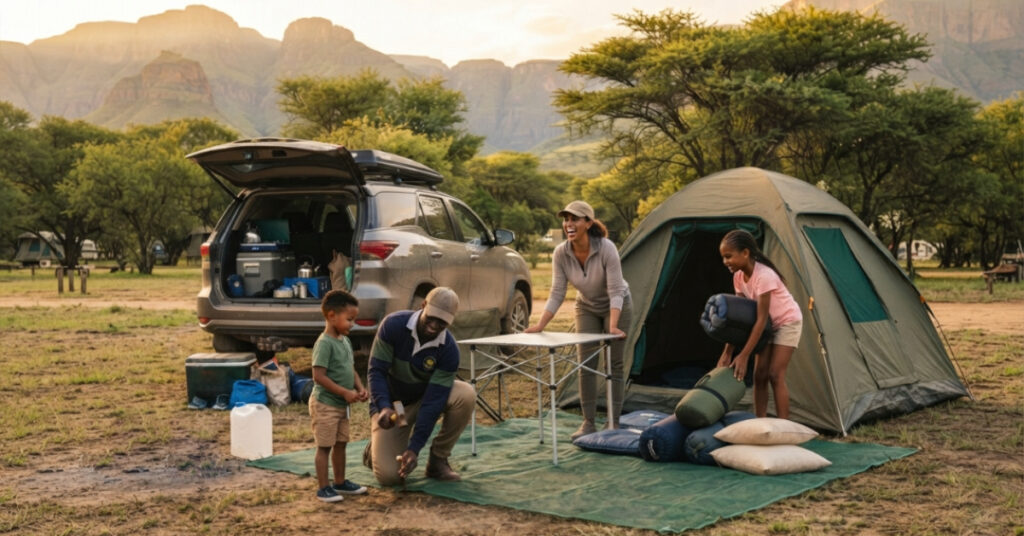
Your first camping trip should be about enjoying the outdoors, not discovering at 8 pm that you forgot the tent pegs.
Camping can look complicated when you see the equipment carried by experienced campers, caravan owners and overlanders. The reality is much simpler. For a first trip, you need to solve five basic problems: where you will sleep, how you will stay comfortable, how you will prepare food, how you will manage water and how you will stay safe.
Everything else is either useful or optional.
This beginner camping checklist for South Africans is designed around the way people actually camp here. That includes traditional tent camping, family campsites, caravans and off-road trailers — also commonly called bossleepwa in Afrikaans. You do not need a fully equipped overlanding vehicle or top-of-the-range caravan to have a great camping weekend.
The key is choosing equipment that suits your destination, camping style and expected conditions.
Quick Answer: What Do Beginners Need for Camping?
For a basic South African camping trip, start with a suitable shelter, sleeping system, cooking equipment, food and water, lighting, clothing, personal items and basic safety equipment.
Your core equipment should include:
- Tent, with poles, pegs and guy ropes
- Ground sheet
- Sleeping bag or suitable bedding
- Sleeping mattress or sleeping system
- Pillow
- Camping table and chairs
- Stove and appropriate fuel
- Cooking pot and basic utensils
- Plates, bowls, cups and cutlery
- Cooler box or camping fridge
- Drinking water, or suitable storage container for sites with water
- Torch or headlamp
- First aid kit
- Insect repellent
- Sunscreen and hat
- Warm and weather-appropriate clothing
- Rubbish bags
- Basic tools and repair supplies
You do not need to buy everything at once. Borrowing or renting some equipment is often the best way to discover what you actually need before investing in a complete setup. Once you have tried it out and have a better idea how you prefer to camp, equipment decisions become easier to make.
Table of Contents
Before You Pack: Plan the Trip
The biggest beginner mistake is buying equipment before deciding what type of camping you actually intend to do.
A weekend at a developed caravan resort is very different from hiking into a remote campsite. A family campsite may have ablutions, electricity and water close by, while a remote destination may require you to carry everything you need.
Start by answering a few questions.
Where are you going? Check the expected weather, campsite facilities, road conditions and any specific rules.
How are you getting there? A family car with a ground tent has very different storage limitations from a caravan, off-road trailer or 4×4.
How many people are going? Your shelter, cooking equipment, water and food requirements increase quickly with group size.
How long are you staying? A single night requires much less planning than a week away.
What facilities are available? Confirm whether the campsite has electricity, drinking water, ablutions, washing facilities, braai facilities or shops. Do not assume that because one campsite provides something, every campsite will.
Shelter: Your Tent and Campsite
For tent campers, the tent is the most important piece of equipment you own.
It needs to be large enough for the number of people using it, appropriate for the expected weather and practical to pitch. For a first trip, simplicity is valuable. A tent that can be pitched quickly and confidently is usually more useful than a complicated shelter with features you do not understand.
Your basic tent checklist
- Tent
- Tent poles
- Tent pegs
- Guy ropes
- Mallet or suitable peg hammer
- Ground sheet
- Tent repair supplies
Do not wait until the campsite to discover that a pole section is missing.
Pitch the tent at home before your first trip. This lets you identify missing parts, understand how the poles connect and discover whether anything has deteriorated in storage if the tent is not new. Pay particular attention to tent poles, elastic shock cord, pegs, guy lines and zips. A practice pitch also allows your camping group to work through any tricky or confusing assembly steps for the first time in a low-stress and less public environment.
Once you’ve practiced and checked the tent over, make sure everything gets packed back into the appropriate place again! Not only does this make sure that you absolutely have the tent pegs when you get to your destination, it helps build good habits to ensure you also take everything home again at the end of your trip.
A small tent repair kit and a few practical items such as strong tape and cable ties can be worthwhile additions to your gear.
Where you pitch matters
Choose level ground where possible, avoid obvious drainage channels or depressions, and consider wind exposure. Do not automatically choose the most scenic-looking spot if it leaves you exposed to strong wind or water runoff.
A ground sheet should be used appropriately for your tent and campsite (campsites often have rules about the type of groundsheets that may be used). Solid groundsheets should not extend substantially beyond the tent footprint where rain could collect between the ground sheet and tent floor.
Sleeping Gear
A comfortable night’s sleep can make the difference between loving camping and deciding it is not for you.
Your sleeping system normally consists of three things: insulation from the ground, bedding and a pillow.
Sleeping mattress
Do not underestimate the importance of the mattress. The ground can draw heat away from your body, and hard or uneven ground quickly becomes uncomfortable. Options include foam mattresses, self-inflating mattresses and inflatable air mattresses.
While stretchers are great additions to a camping setup, especially if getting up off the ground is hard on your joints, they are by no means a must-have for an absolute beginner, occasional camper or where packing space is limited. Care should also be taken that they fit appropriately in your tent.
Sleeping bag or bedding
Choose according to the expected conditions. South African winters can be particularly deceptive because warm daytime temperatures do not necessarily mean warm nights. Inland and high-altitude destinations can become very cold.
For summer camping, lighter bedding may be sufficient. For colder trips, choose a sleeping bag appropriate to the expected overnight temperature and consider additional blankets if required.
Pillow
A camping pillow is convenient to pack, but a normal pillow can work perfectly well if space allows. There is no prize for making yourself uncomfortable!
Camp Kitchen and Food
Food is one of the great pleasures of South African camping. For beginners, however, the best camp kitchen is usually a simple one. You need a reliable way to cook, something to keep food cold where necessary, and enough equipment to prepare and eat your meals.
Basic camp kitchen checklist
- Camping stove
- Gas or other appropriate fuel
- Cooking pot
- Frying pan if needed
- Kettle
- Braai grid where appropriate
- Tongs
- Cutting board
- Knife
- Wooden or heat-resistant cooking utensil
- Plates or bowls
- Cups or mugs
- Cutlery
- Dishwashing liquid
- Sponge or scourer
- Dish cloths
- Food storage containers (essential for securing food from any wildlife or pests)
- Rubbish bags
- Cooler box or camping fridge
If you are camping somewhere with a designated braai facility, you may not need to bring a separate braai stand. Facilities and availability vary, so check before leaving.
Plan your first meals
Do not make your first camping trip unnecessarily complicated – choose meals that use familiar ingredients and require relatively little preparation. A potjie, braai, pasta dish, stew or simple breakfast can be much easier to manage than attempting elaborate outdoor cooking when starting out.
Water
Never assume you can simply find water when you arrive. Check the facilities at your destination before leaving and establish whether drinking water is available.
For remote camping, carry sufficient water for drinking, cooking and basic washing, plus an appropriate reserve. Water requirements vary considerably according to temperature, activity level, individual needs and whether you are travelling with children. If a campsite advises visitors to bring their own drinking water, take that requirement seriously. SANParks, for example, specifically identifies additional water requirements for some remote facilities.
Even where water availability isn’t an issue, walking back-and-forth to a tap every time you need to fill a pan or have a drink may not be convenient. Water containers with secure lids, which aren’t too heavy to handle when full and are easy to dispense from are a useful addition to your camping equipment.
Clothing and Personal Gear
Pack for the weather you are likely to experience, not just the season printed on the calendar. South Africa’s geography means winter camping in the Drakensberg can require very different clothing from a winter weekend in the Lowveld.
Your clothing should generally include:
- Comfortable outdoor clothing
- Underwear and socks
- Warm layer
- Weatherproof outer layer where appropriate
- Hat or cap
- Warm beanie for cold conditions
- Comfortable shoes
- Sandals or camp footwear
- Sleepwear
- Rain protection where appropriate
Pack an extra warm layer even if the forecast looks favourable – a sunny afternoon can turn into a cold evening, particularly inland or at altitude.
Do not forget personal toiletries, medication, sunscreen, insect repellent and any prescription medication required by members of your group.
Lighting and Power
One of the most common beginner mistakes is underestimating how dark a campsite becomes at night. A phone flashlight is useful in an emergency, but it should not be your primary camping light.
Pack at least one proper torch or headlamp for concentrated directional light, a portable lantern for general illumination in your tent or at the camp table and preferably have a backup light source just in case.
General campsite lighting may be limited at night to avoid disturbing campers or non-existent in remote or wild sites. You do not want to run into an obstacle or wildlife when moving around in the dark, so a headlamp or torch are essential. A headlamp is particularly useful because it leaves both hands free when cooking, walking or setting up camp.
For longer trips, consider:
- Spare batteries
- Rechargeable lantern
- Power bank
- Vehicle charging cable
- Suitable extension lead if the campsite provides electricity
Do not assume you will have access to mains electricity. If electricity is important to your setup, confirm the campsite’s facilities and those supplied to your pitch before travelling.
First Aid and Safety
A first aid kit should be easy to reach rather than buried at the bottom of the boot.
For a normal camping trip, consider carrying supplies for common minor injuries such as cuts, grazes, blisters and minor burns, along with personal medication.
A practical kit can include:
- Adhesive plasters
- Sterile dressings
- Gauze
- Medical tape
- Elastic bandage
- Disposable gloves
- Scissors
- Tweezers
- Blister treatment
- Suitable burn-care supplies
- Personal medication
- Appropriate over-the-counter medication
Your first aid kit should match the trip. A remote hiking trip requires different preparation from a weekend at a developed campsite. Most importantly, know how to use the equipment you carry.
For serious injuries, significant burns, severe allergic reactions, suspected snakebite or other emergencies, know how and where to summon help. First aid should be used to support the injured person while professional medical assistance is obtained, not as a substitute for it.
Tools, Repairs and Camping Maintenance
You do not need to take an entire workshop on your first camping trip. A small collection of useful tools can, however, solve many annoying problems.
Consider carrying:
- Multi-tool
- Pliers
- Screwdrivers
- Adjustable spanner
- Cable ties
- Strong tape
- Spare tent pegs
- Basic tent repair supplies
- Spare guy line
- Rope or utility cord
- Small torch
- Work gloves
If travelling with a caravan or off-road trailer, your requirements become more extensive. Your towing setup should be inspected before departure, including tyres, wheels, lights, electrical connections, coupling and other equipment appropriate to the trailer.
Do not confuse a beginner camping checklist with an overlanding recovery kit. Your equipment should reflect the actual journey you are undertaking.
What Changes for Caravans and Trailers?
South African camping is not limited to tents. Many families camp using caravans, off-road caravans or off-road trailers. If you already have or are renting a caravan or trailer, much of the shelter and sleeping equipment may be built into your setup.
Your checklist should concentrate on the equipment that supports it.
Before leaving, check:
- Tyres and tyre pressures
- Spare wheel
- Wheel nuts
- Coupling
- Safety chains
- Electrical connections
- Lights
- Battery
- Water system
- Gas system
- Awning
- Tent or annex if fitted
- Levelling equipment
- Chocks
- Basic tools
The more remote the destination and the more demanding the road, the more important pre-trip inspection becomes.
South African Camping Considerations
Camping conditions vary enormously across South Africa, so your checklist should reflect where you are going and the time of year you are going there.
Heat and sun
Carry sunscreen, a hat, adequate water and suitable shade. Do not assume that because you are camping in winter you cannot experience strong sun exposure.
Cold
Inland and mountain areas can become very cold overnight and gusty winds can crop up unexpectedly in many locations. Pack multiple lighter layers rather than relying on a single heavy jacket so you can tailor your warmth to specific conditions and activity levels.
Rain
Summer thunderstorms can arrive quickly in many parts of the country. Make sure your shelter is correctly pitched and that waterproof equipment is genuinely in good condition before leaving. A lightweight waterproof jacket can make moving around camp much more comfortable in wet weather, even in summer.
Insects
Insect repellent can be particularly useful depending on your destination and season. Be mindful of local malaria risk and whether it is seasonal or year-round.
Wildlife
When camping in wildlife areas, follow the rules of the reserve or park. Keep food and rubbish managed appropriately and never approach, feed or interfere with wildlife.
In some protected areas, even seemingly harmless camping habits can have serious consequences. Follow the specific regulations of the destination rather than assuming normal campsite rules apply everywhere.
Fire
Use fires only where permitted and in designated facilities where required. Never leave fires unattended and be aware of local fire risk conditions.
What Beginners Often Forget
The expensive equipment is rarely what gets forgotten, it is usually the small but essential things.
Common omissions include:
Mallet. The tent is packed, but there is nothing to drive the pegs in.
Headlamp. It becomes difficult to set up camp once the sun goes down.
Rubbish bags. Every campsite needs a plan for waste.
Toilet paper. Never assume every destination has a supply available.
Lighter or matches. Essential if you are relying on a stove or permitted fire.
Warm clothing. South African evenings can become surprisingly cold.
Extension lead. Useful only if your campsite provides electricity and your equipment requires it. Check which type of electrical point the campsite has – a cable that you cannot plug in is no use.
Extra tent pegs. A few spares take little space.
First aid kit. The time to discover it is missing is not after someone gets hurt.
Personal medication. This should be checked before every trip.
Keys. If you’re transporting your camping equipment in a trailer or making use of a caravan or off-road camp trailer, make sure that you have the keys to any locks with you before you leave and keep hold of them safely.
The First-Night Checklist
Your first night at camp is when organisation matters most.
Before settling down, check that:
- Tent is correctly pitched and secured
- Guy ropes are tensioned
- Sleeping system is ready
- Warm clothing is accessible
- Torch or headlamp is within reach
- Food is properly stored
- Rubbish is secured or disposed of correctly
- Stove or gas equipment is safely stored when not in use
- Campfire is completely extinguished when finished
- First aid kit is accessible
- Vehicle is secured
- Camping equipment is protected from expected weather
This simple routine prevents many of the classic first-night camping problems.
Final Thoughts
You do not need a garage full of expensive equipment to start camping. A good tent, comfortable sleeping system, practical cooking equipment, suitable clothing, lighting, water and basic safety equipment will take you a long way.
The important part is matching your equipment to the trip.
A weekend at a developed campsite does not require the same equipment as a remote hiking trip. A family travelling with a caravan has different requirements from someone pitching a small tent next to a car. An off-road trailer or bossleepwa brings another set of considerations.
Start with the essentials, borrow where practical, and learn from each trip. Most importantly, test your equipment before you leave home. Pitch the tent. Check the poles and pegs. Test the stove. Charge the lights. Inspect the first aid kit. Check the weather. A little preparation at home is much easier than solving a preventable problem after dark at the campsite.
FAQs
What is the most important camping equipment for beginners?
The essentials are shelter, a comfortable sleeping system, cooking equipment, food and water, suitable clothing, lighting and basic safety equipment. Everything beyond these categories is largely about comfort, convenience or the specific type of trip.
What should I pack for my first camping trip in South Africa?
Start with a tent, poles, pegs, ground sheet, sleeping bag or bedding, mattress, pillow, stove, cooking equipment, food, water, lighting, clothing, first aid supplies, toiletries, sunscreen, insect repellent and basic repair equipment.
Do I need expensive camping gear to start camping?
No. Beginners are often better served by buying reliable basic equipment rather than immediately investing in highly specialised gear. Your needs will become clearer after a few trips.
What should I check on my tent before camping?
Check the tent fabric, seams, zips, poles, pole connectors, shock cord, pegs and guy ropes. Pitching the tent at home before your first trip is one of the best ways to identify problems.
Do I need a camping fridge?
Not necessarily. A good cooler box can be perfectly adequate for a short camping trip if it is packed and managed correctly. A camping fridge becomes more useful for longer trips or when temperature control is important.
How much water should I take camping?
There is no universal quantity because requirements depend on temperature, activity, group size, available facilities and individual needs. Always check whether potable water is available at your destination and carry enough for the conditions and duration of the trip.
Should beginners buy a caravan or off-road trailer?
Not necessarily. A tent is often the simplest way to discover whether you enjoy camping. If you later find that you want more space, comfort or extended trips, a caravan, off-road caravan or bossleepwa may make sense for your style of camping.
What should I take camping in winter?
Pack a sleeping system suitable for the expected overnight temperature, warm layers, a beanie, warm socks and appropriate weather protection. South African inland and mountain areas can become considerably colder at night than daytime conditions suggest.
What camping equipment is easy to forget?
Small items are commonly forgotten: tent pegs, mallets, headlamps, batteries, rubbish bags, toilet paper, matches or lighters, warm clothing, first aid supplies and personal medication.
 Camping and Hiking Gear
 Climbing Gear
 Hunting and Tactical
 Leisure Gear
 Outdoor Accessories
 Outdoor Apparel
 Home
Home Shop
Shop Field Guide
 Account
 Wishlist
 Help Centre
 Contact Us