

First Aid Essentials for Camping Trips
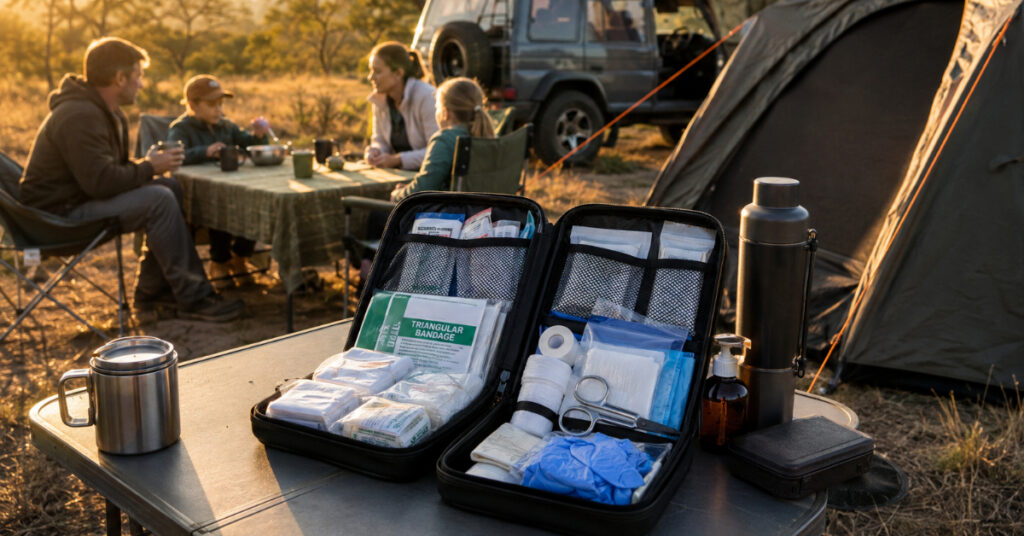
A first aid kit is one of those pieces of camping equipment you hope you never need, but will be very glad to have when something goes wrong.
A cut while preparing food, a blister halfway through a hike, a minor burn around the campfire or a twisted ankle on uneven ground can turn a good outdoor trip into a difficult one surprisingly quickly. In more remote areas, the distance from professional medical care makes preparation even more important.
The best first aid kit for camping is not necessarily the biggest one. It is one that matches the trip, contains supplies you know how to use, and is easy to find when you need it.
For South African campers, hikers and overlanders, that means thinking beyond a handful of plasters. Heat, sun exposure, insects, uneven terrain, campfires, long drives and encounters with wildlife can all influence what belongs in your kit.
This guide explains the first aid essentials for camping trips, how to build a practical kit, what to add for hiking and remote travel, and which situations require professional medical attention.
Important: This article provides general first-aid preparedness information, not a substitute for professional medical training or medical advice. For serious injuries, severe allergic reactions, suspected poisoning, snakebite, significant burns or any rapidly worsening condition, seek professional medical assistance as soon as possible.
Quick Answer: What Should Be in a Camping First Aid Kit?
A practical camping first aid kit should contain supplies for the minor injuries you are most likely to encounter, together with a few items that can help you manage a more serious problem while professional assistance is arranged.
For a typical camping trip, consider carrying:
- Adhesive plasters and sterile dressings
- Sterile gauze
- Medical tape
- Elastic or compression bandage
- Antiseptic or wound-cleaning supplies
- Disposable nitrile gloves
- Scissors and tweezers
- Blister treatment
- Burn dressings or suitable burn-care supplies
- A triangular bandage
- Pain-relief medication appropriate for the user
- Antihistamine where appropriate
- Oral rehydration solution
- Personal prescription medication
- Instant cold pack
- Emergency blanket
- Hand sanitiser
- A first-aid reference guide
The contents should be adjusted according to the number of people, trip duration, activities, remoteness, weather and individual medical needs.
Table of Contents
Why First Aid Matters When Camping
At home, a minor injury is usually inconvenient rather than particularly concerning. You can reach the bathroom cabinet, pharmacy or doctor relatively quickly.
Camping changes that equation.
You might be several hours from the nearest town, on a hiking trail without vehicle access, or travelling through a remote part of South Africa. Even at a developed campsite, it can take time to get someone to appropriate medical care. That is why a camping first aid kit should be viewed as a way of buying time and managing minor problems, rather than as a portable hospital. The American Red Cross similarly recommends tailoring a kit to factors such as the number of people, location, terrain and duration of the trip.
Just as importantly, learn how to use what you carry. A sophisticated item is of limited value if nobody in the group knows how or when to use it.
How to Build a Camping First Aid Kit
There is no single perfect camping first aid kit. A family spending a weekend at an established campsite has different requirements from a group hiking for several days in the Drakensberg or an overlander travelling through remote parts of the Northern Cape.
A useful way to build your kit is to start with the problems you are most likely to encounter.
For a normal camping weekend
A compact kit should cover everyday problems such as cuts, grazes, blisters, minor burns, splinters, insect bites and minor strains.
For hiking
Reduce unnecessary bulk but increase items that address foot problems, wounds, sprains and injuries that could affect mobility.
For remote or multi-day trips
Consider additional supplies for prolonged wound care, serious bleeding, immobilisation and environmental emergencies, but only carry equipment you have been trained to use. The further you travel from professional medical care, the more important training, communication and evacuation planning become.
Wound Care Essentials
Cuts and abrasions are among the most predictable camping injuries. Knives, firewood, tent pegs, sharp branches, tools and cooking equipment all create opportunities for minor wounds.
Your kit should therefore include sterile dressings or gauze, adhesive plasters in several sizes, medical tape and suitable wound-cleaning supplies.
Nitrile gloves are also important when treating another person’s injury. They provide a basic barrier between the injured person and the first aider and are preferable for many people to latex gloves because of latex-allergy concerns.
For larger wounds, the objective of basic first aid is not to perform complicated treatment at the campsite. It is to control bleeding, protect the wound and arrange appropriate medical care when necessary. A wound that is deep, heavily contaminated, continues bleeding despite appropriate pressure, or involves significant tissue damage should receive professional assessment.
Blisters and Foot Problems
For hikers, blister care deserves a place near the top of the packing list. A small hot spot on your heel can become a painful blister surprisingly quickly, particularly during a long hike with new footwear, wet feet or increased mileage.
Include blister-specific dressings or suitable adhesive protective dressings in your hiking kit.
Prevention is even better than treatment. Pay attention to hot spots early, keep feet reasonably dry, wear suitable socks and make sure your footwear is properly fitted before undertaking a long trail. A first aid kit cannot compensate for poorly chosen hiking footwear.
Burns and Campfire Injuries
Campfires, gas stoves, braais and hot cookware make burns a realistic camping hazard. Your first aid kit should include suitable burn-care supplies, but the most important first-aid response to a burn is appropriate cooling rather than relying on creams or gels.
For a minor thermal burn, cool running water is generally preferred for at least 10 minutes. Avoid putting ice directly onto the burn, and do not apply household substances such as butter or toothpaste. Don’t pop any blisters to reduce infection risk.
More serious burns require medical assessment. Seek urgent professional care for extensive or deep burns, burns involving critical areas such as the face or major joints, electrical or chemical burns, or burns associated with other serious injuries.
The safest approach is prevention: keep children away from fires, establish a clear cooking area and never leave an open flame unattended.
Sprains, Strains and Minor Injuries
Uneven ground, rocks, tree roots and slippery surfaces can make a simple walk around camp surprisingly hazardous.
An elastic bandage can be useful for supporting a minor soft-tissue injury while you assess what to do next. A triangular bandage can also serve several purposes in a basic first aid kit. For hiking and remote trips, a suitable splint can be useful, but splinting is an area where proper training becomes particularly valuable.
Do not assume every painful ankle is simply a sprain. Severe pain, significant swelling, deformity, inability to bear weight or other concerning symptoms warrant medical evaluation. The purpose of a camping first aid kit is to help manage the situation — not to encourage you to diagnose an injury beyond your level of training.
Medication and Personal Medical Needs
Medication is one area where a generic camping checklist can become misleading.
Your kit should include any prescription medication that members of your group regularly require, with enough supply for the trip and an appropriate contingency where practical.
Common over-the-counter items may include pain relief, antihistamines and medication for gastrointestinal problems, but medication should be selected according to the individual’s age, health, allergies, existing medication and the instructions on the product. Do not add prescription medicines to a first aid kit simply because someone on the internet recommends them.
It is also sensible to keep medicines in their original labelled packaging with usage instructions and protect them from excessive heat and moisture.
For children, use medicines specifically appropriate for their age and weight and follow the product or healthcare professional’s instructions.
First Aid for Heat, Sun and Dehydration
South African outdoor conditions make sun and heat management particularly important. A summer camping trip in Limpopo or the Lowveld can be very different from a winter weekend in the Western Cape, but sun exposure remains a consideration almost everywhere.
Your wider first aid and safety supplies should include:
- Sunscreen
- Lip protection with sun protection
- Adequate clean drinking water
- Oral rehydration solution where appropriate
- A hat and sun-protective clothing
Recognise that dehydration and heat-related illness are not simply problems solved by carrying more water. Someone who becomes seriously unwell in the heat may need rapid cooling and medical attention. During strenuous hiking or hot-weather activities, plan water availability before leaving rather than assuming you will find a convenient source along the route.
Insects, Bites and Stings
Mosquitoes, ticks and other biting insects are part of outdoor life in many parts of South Africa.
A first aid kit can include suitable antihistamine medication and insect-bite or itch relief where appropriate, but prevention remains more important. Use insect repellent where appropriate, wear suitable clothing in areas with significant insect exposure and check yourself for ticks after hiking or spending time in vegetation.
If someone develops signs of a severe allergic reaction — particularly difficulty breathing, swelling of the tongue or throat, faintness or rapidly worsening symptoms — treat it as a medical emergency. Anyone with a known severe allergy should carry their prescribed emergency medication and ensure that travelling companions know where it is and how to assist according to their medical plan.
Snakebites and Other Serious Incidents
South African campers need to take snakebite seriously without allowing fear to dominate the camping experience. South Africa has more than 170 snake species, although only a relatively small proportion are considered potentially dangerous to humans. Importantly, South African Department of Health guidance advises treating snakebites as potentially dangerous until assessed appropriately.
If someone is bitten, move them away from the snake and seek emergency medical assistance immediately.
Do not attempt to catch or handle the snake. If it can be photographed safely from a distance, a photograph may assist identification, but the victim’s safety comes first.
South African guidance specifically warns against several traditional snakebite practices, including cutting or squeezing the wound and attempting to suck out venom. Tourniquets should not be routinely applied. This is an important reason to learn current first aid rather than relying on advice passed down from older camping traditions.
Some scorpion stings and certain spider bites can also require medical assessment. South African Department of Health guidance advises referral when systemic symptoms develop, including weakness, difficulty breathing, swallowing or speaking, or other significant neurological symptoms.
The general rule is simple: serious bites and stings require professional medical advice, not improvised treatment.
First Aid for Hiking and Remote Camping
A hiking first aid kit needs to be more compact and more deliberately chosen than a large family camping kit. When you’re carrying everything on your back, every item needs to justify its weight.
Prioritise supplies for:
- Blisters
- Cuts and abrasions
- Wound dressing
- Bleeding control
- Sprains and strains
- Burns
- Allergic reactions
- Personal medication
- Environmental exposure
An emergency blanket is also small, light and potentially useful when dealing with cold exposure or an unexpected overnight delay.
For remote hiking, first aid should form only one part of a broader emergency plan. Navigation, communication, water, shelter, clothing and a way of summoning help can be just as important. The American Red Cross recommends adapting hiking first aid kits according to the terrain, climate, remoteness and duration of the trip.
How to Store and Maintain Your First Aid Kit
A first aid kit is only useful if you can find what you need quickly. Keep supplies together and well organised in a clearly identifiable, durable bag or container. A waterproof or water-resistant pouch is particularly useful for camping and hiking.
Check the kit before every trip.
Look for:
- Expired medication
- Damaged packaging
- Used dressings
- Empty items
- Dried-out products
- Missing personal medication
- Damaged gloves
- Supplies affected by moisture or heat
Heat deserves particular attention in South Africa. Do not leave medication or heat-sensitive medical supplies sitting in a hot vehicle unnecessarily.
Organise the kit so frequently needed items are easy to reach. A first aid kit containing everything you need but buried underneath camping equipment isn’t particularly useful when someone is bleeding.
Common First Aid Kit Mistakes
Buying the biggest kit available
More equipment does not automatically mean better preparedness. A kit should match the trip and the user’s training.
Carrying equipment you don’t know how to use
This is particularly important with advanced trauma equipment. If you carry it, learn how to use it properly.
Forgetting personal medication
A commercial first aid kit will not necessarily contain what an individual traveller needs. Each of us has our own personal medical history.
Leaving the kit in the vehicle
During a hike, the vehicle may be several kilometres away. Carry an appropriate first aid kit with you.
Never checking the contents
A first aid kit is not something you buy once and forget about, it requires regular routine inspection.
Relying on first aid instead of evacuation planning
A first aid kit can help bridge the gap to professional care. It should never create a false sense of security about serious injuries and does not replace proper contingency planning, especially when visiting remote or difficult to access areas.
Final Thoughts
The best first aid kit for camping is not the one with the most items. It is the one that is appropriate for the trip, maintained properly and backed up by people who know how to use it. For a family camping weekend, that might mean a compact kit covering cuts, burns, blisters, minor injuries and common medications. For a remote hiking expedition, the kit should be adapted to the terrain, duration and distance from medical care.
South African conditions also make it sensible to think beyond everyday cuts and scrapes. Heat, sun exposure, insects, uneven terrain and potentially serious bites and stings all deserve consideration.
Most importantly, learn basic first aid before you need it. A first aid course is one of the most valuable pieces of preparation you can take into the outdoors because knowledge weighs nothing, never runs out and can make the difference while help is on the way.
FAQs
What are the most important first aid essentials for camping trips?
Start with wound dressings, plasters, gauze, medical tape, gloves, an elastic bandage, blister treatment, burn-care supplies, scissors, tweezers, personal medication and basic medicines appropriate for your group. Add equipment according to the trip’s duration, location and activities.
Should I buy a pre-packed camping first aid kit?
A pre-packed kit can be a useful starting point, but it should be checked and customised. Commercial kits may contain items you do not need while lacking supplies specific to your group or destination.
What should I take on a hiking trip?
Keep the kit lightweight but prioritise blister treatment, wound care, bleeding control, bandaging, personal medication and items appropriate for the terrain. Remote or multi-day hikes may justify additional equipment, provided you know how to use it.
Do I need a snakebite kit when camping in South Africa?
Do not rely on commercial snakebite kits or traditional remedies as a substitute for appropriate medical care. Learn current South African snakebite first aid and have a plan for obtaining emergency assistance. South African guidance specifically discourages cutting, sucking and routine tourniquet use. The African Snakebite Institute is a useful source for information.
What should I do if someone is bitten by a snake?
Move the person away from the snake, keep them as calm and still as practical, and seek emergency medical assistance immediately. Do not attempt to catch the snake or use traditional methods such as cutting or sucking the bite.
How often should I check a camping first aid kit?
Check it before every trip and replace anything that has been used, damaged or expired. Medication and other temperature-sensitive supplies should be stored according to their specific requirements.
Should a camping first aid kit contain prescription medication?
It should contain the prescription medication required by members of your group, but medicines should not be added simply on the assumption that they might be useful. Keep personal medicines properly labelled and follow the relevant medical instructions.
Is first aid training worth doing before camping?
Yes. A first aid kit cannot replace knowledge. Basic first aid training is particularly valuable when camping or hiking far from professional medical assistance.
 Camping and Hiking Gear
 Climbing Gear
 Hunting and Tactical
 Leisure Gear
 Outdoor Accessories
 Outdoor Apparel
 Home
Home Shop
Shop Field Guide
 Account
 Wishlist
 Help Centre
 Contact Us