

How to Plan a Camping Trip in South Africa
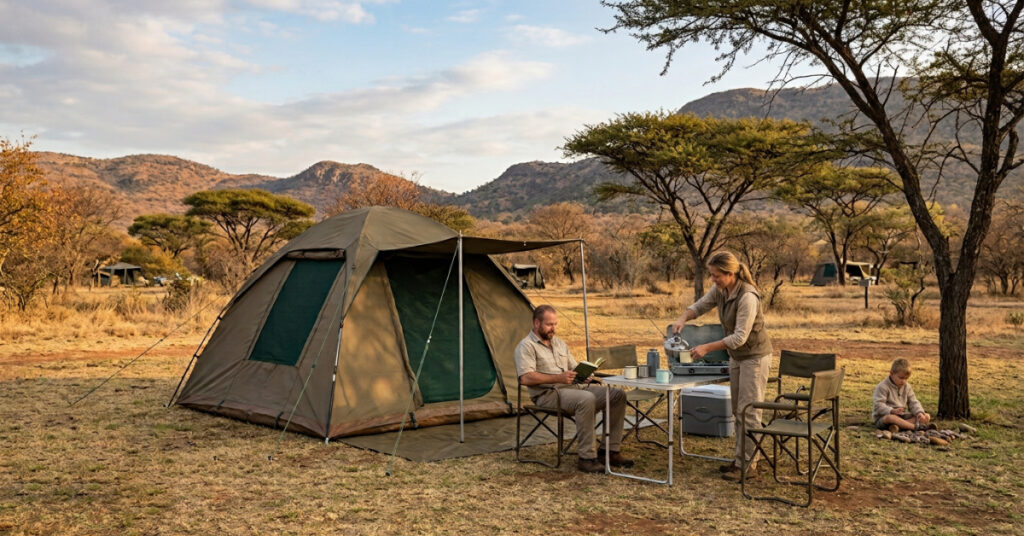
A successful camping trip starts well before you arrive at the campsite. The destination, facilities, activities, weather, travel time and needs of everyone in your group all influence what you should book, pack and budget for.
South Africa offers a wide variety of camping experiences, from established holiday resorts beside dams to coastal campsites, municipal caravan parks and protected natural areas. They do not all offer the same facilities, level of comfort or opportunities for activities. Even a familiar campsite can change over time.
The best plan is not necessarily the most elaborate one. It is a trip that suits your group, your budget and the conditions you can reasonably expect.
1. Decide what kind of camping trip you want
Before comparing campsites, agree on what you want from the trip. This will make it easier to identify suitable destinations and avoid paying for facilities or activities you will not use.
Consider the following:
- Who is going? A couple, a group of friends and a family with young children may have very different priorities.
- How long will you stay? A single night may suit a simple campsite close to home, while a longer holiday may justify travelling further for a particular setting or range of activities.
- What do you want to do? Swimming, fishing, hiking, birdwatching, cycling, paddling and simply relaxing all influence your choice.
- How much comfort do you need? Decide whether you want electricity, hot showers, nearby shops, a swimming pool or other conveniences.
- What equipment do you have? A tent, caravan and trailer setup have different space, access and storage requirements.
- How much travel can you manage? Include the driving time, likely traffic and the practicalities of arriving and setting up before dark.
Discuss these priorities with the group before booking. It is easier to find a campsite that suits everyone when you know which requirements are essential and which are simply nice to have.
2. Choose a campsite that suits the trip
Different campsite settings offer different advantages. Treat these as starting points for your search, not guarantees about the facilities or experience at any particular site.
Municipal and holiday resorts
Municipal caravan parks and established holiday resorts can suit families and groups looking for a developed campsite, often with access to ablutions, water, electricity or recreational facilities. The actual offering varies considerably, so check what is available at the specific resort rather than relying on its name or reputation.
Dam and inland-water campsites
Campsites beside dams and other inland waters can appeal to visitors interested in fishing, boating, paddling, swimming where permitted, or spending time beside the water. Confirm which activities are allowed, whether permits or additional fees apply, and whether the relevant facilities are operating.
Do not assume that access to a dam means swimming or launching a boat is permitted. Check the site’s rules and any restrictions that apply to the water body.
Seaside campsites
Coastal camping can provide access to beaches, fishing, coastal walks and nearby towns. Check how far the pitches are from the beach, whether wind exposure may affect your setup, and what the weather is likely to be during your stay.
If swimming is part of the plan, check local conditions and use appropriate designated swimming areas where available. A campsite near the sea does not necessarily provide safe swimming conditions or lifeguard supervision.
National and provincial parks, reserves and conservation areas
These destinations may offer access to hiking trails, wildlife viewing, birdwatching and other nature-based activities. Facilities, access conditions and rules differ between protected areas.
Check the official park or reserve information for camping availability, permitted activities, vehicle restrictions, gate times, conservation fees and any age restrictions that may affect your group. Do not assume that pets, fires, off-road driving or access to every trail are permitted.
Private and more remote campsites
Private campsites range from well-equipped family destinations to simpler sites with limited services. Remote locations may offer a quieter experience, but can require more careful planning for water, food, fuel, communications and access.
Establish exactly what is provided and what you must bring yourself. If the site is reached by an unpaved or difficult road, check whether your vehicle and camping setup are suitable for the current conditions.
3. Verify the campsite’s current condition
This is one of the most important checks to make before paying for a booking.
A campsite may have been well regarded in the past but subsequently experienced changes in ownership or management, deferred maintenance, flood damage, closures or reduced services. Conversely, a site that previously had problems may have been repaired or reopened. An old review, photograph or directory entry cannot establish what you will find when you arrive.
Before booking, confirm:
- That the site is operating: Check that it is accepting bookings for your intended dates and that the camping area you want is open.
- That the facilities you need are available: Ask about ablutions, showers, water, electricity, swimming pools, recreational areas and other facilities important to your group.
- That your pitch is usable: Check for any closures, restrictions, maintenance work or changes affecting the camping area.
- That the information is current: Look for recent photographs and reviews, but treat them as supporting evidence rather than a guarantee.
- That you can reach the right person: Confirm the current booking contact, management arrangements, payment method and arrival procedure.
- That any important uncertainty is resolved: If you need working showers, a suitable family pitch or a particular access road, ask directly and get written confirmation where practical.
Use the campsite’s current official information or contact the responsible operator, municipality or park authority. If essential questions remain unanswered, consider another option rather than relying on assumptions.
This check is particularly valuable when booking a campsite you have not visited before or returning to one after several years.
4. Check facilities, shops and supplies
A campsite’s facilities can make a substantial difference to the way your trip works. Read the details carefully and confirm anything that is unclear.
Check whether the site provides:
- Ablutions and showers, including whether hot water is available.
- Drinking water and convenient access to taps.
- Electricity at the pitch, if you need it.
- Braai facilities or other permitted cooking arrangements.
- Rubbish disposal and dishwashing facilities.
- A shop, restaurant or other food options.
- Reception or security arrangements appropriate to the destination.
- Mobile reception, if you need it for communication or work.
Do not assume that electricity is available at every pitch simply because the resort advertises electrical connections. Confirm what your particular booking includes and what connection equipment, if any, you must bring.
Find out where you can buy supplies
A shop on the premises can be convenient, but it may have a limited range or restricted opening hours. Before leaving, establish what it stocks and whether it is likely to meet your needs.
Ask yourself:
- Can I buy basic groceries, ice, drinking water or firewood if permitted?
- Is there a nearby supermarket, fuel station, pharmacy or other essential service?
- How far away is the nearest alternative, and how long will the drive take?
- Will the shop or nearby businesses be open when I arrive?
- What must I bring because it may be unavailable locally?
If you are travelling with babies, young children or anyone who needs particular food, medication or supplies, plan for those needs rather than assuming they can be met at the destination.
5. Match the campsite to your group
A campsite that works well for one group may be frustrating for another. Consider the ages, interests, mobility and needs of everyone travelling with you.
Babies and infants
For babies, consider shade, access to clean water, suitable sleeping arrangements, changing facilities and the practicalities of preparing bottles or food if needed. Think about how you will manage naps, night-time care and changing weather.
A long walk from the pitch to the ablutions or a shop with limited supplies may create unnecessary complications. Check the layout and facilities before booking.
Toddlers and preschoolers
Look for a setting where you can supervise young children comfortably. Consider the distance to roads, water, steep drops or other hazards, as well as the availability of suitable play areas or family activities.
Ask whether the campsite is generally quiet or busy, and whether pitches are close together. A swimming pool or dam may be attractive, but it also means you need to understand the site’s safety arrangements and maintain appropriate supervision.
School-age children and pre-teens
Children in this age group may enjoy a mix of structured activities and room to explore within agreed boundaries. Look for opportunities that match their interests, such as nature walks, cycling, fishing, swimming where permitted or organised activities.
Check age limits, equipment requirements, supervision rules and additional costs. A destination with several suitable activities may be a better fit than one that offers a single attraction that everyone tires of quickly.
Teenagers
Teenagers may appreciate more choice over how they spend their time. Depending on their interests, that could mean hiking, cycling, fishing, swimming where permitted, organised activities or simply having space to relax.
Check whether the campsite offers enough to keep them interested, what rules apply to independent movement around the site, and whether mobile reception or nearby activities matter to your group. Agree on boundaries and meeting arrangements before the trip.
Consider the whole group
A campsite should not be chosen around the youngest or most active person alone. Consider older relatives, mobility needs, dietary requirements, medical needs and how much activity different members of the group want.
If everyone has different priorities, identify the essentials first and look for a destination that offers a workable compromise.
6. Check activities, access and extra costs
A campsite’s advertised activities may be seasonal, weather-dependent, subject to maintenance or available only at an additional cost.
Before you book, check:
- Which activities are actually available during your dates.
- Whether advance reservations or permits are needed.
- Any age, height, fitness or supervision restrictions.
- Equipment hire costs and whether you need to bring your own.
- Whether trails, beaches, swimming areas or other attractions are accessible.
- How far nearby activities are from the campsite and what the journey involves.
If an activity is the main reason for choosing a destination, confirm its availability directly. Do not build the entire trip around an attraction based only on an old photograph or a general resort description.
It is also worth having a simple alternative in mind in case weather, closures or changing conditions disrupt the original plan.
7. Work out the full cost
The campsite fee is only one part of the budget. Travel, food, activities and equipment can make a substantial difference to the final cost.
Allow for:
- Campsite fees and any booking or conservation charges.
- Fuel, tolls and other travel expenses.
- Food, drinking water and ice.
- Activities, permits and equipment hire.
- Firewood or other supplies where permitted.
- Equipment you need to buy, borrow or rent.
- A reasonable reserve for unexpected expenses.
Check how the campsite charges: the price may depend on the number of people, vehicles, pitches or nights. Establish whether children have different rates and whether additional facilities carry separate fees.
Compare the total cost of realistic options, not just their advertised nightly rates. A more expensive campsite closer to home may cost less overall than a cheaper one that requires a long drive and paid activities.
8. Book and confirm the details
Once you have chosen a suitable campsite, use its official booking channel or another authorised booking provider.
Before paying, make sure you understand:
- The exact dates and number of nights.
- The number of adults and children included.
- The pitch type, size and occupancy limits.
- What is included in the price.
- Deposit, payment, cancellation and refund conditions.
- Check-in and departure times.
- Rules on visitors, pets, noise, fires and vehicles.
- Any documents or permits you need on arrival.
Keep the confirmation and the campsite’s contact details accessible while travelling. Recheck the booking shortly before departure, particularly if there have been recent weather events, maintenance notices or changes to access.
9. Plan the journey and arrival
Work out your route before leaving, including likely traffic, rest stops and the time needed to reach the campsite. Aim to arrive with enough daylight to find your pitch, set up camp and deal with small problems without rushing.
Check road conditions and access information close to departure. If the route includes gravel roads, steep sections or other challenging terrain, confirm that it is suitable for your vehicle and camping setup.
Download or save the directions and booking details in case mobile reception is unreliable. Tell someone your general destination and expected arrival time if that is appropriate for your trip.
On arrival, follow the site’s check-in procedure and ask about any temporary restrictions, local hazards, emergency contacts or changes to facilities. Find out where to get help if something goes wrong.
10. Prepare your equipment for the destination
Choose equipment according to the campsite, expected conditions and type of trip. A developed campsite with nearby facilities does not require the same preparation as a location where you must carry all your supplies.
Before leaving home:
- Pitch your tent or inspect your caravan or trailer setup.
- Check that essential components are present and working.
- Test lighting and charge batteries or power banks.
- Check cooking equipment and fuel arrangements.
- Prepare suitable bedding and clothing for expected temperatures.
- Plan food storage and waste disposal.
- Pack personal medication and appropriate first aid supplies.
- Make sure you have the equipment needed for the activities you intend to do.
If this is your first trip, the Beginner Camping Checklist for South Africans can help you work through the equipment categories. For tent campers, How to Pitch Your Tent explains the setup process.
11. Recheck the weather and local rules
South African conditions vary widely by region, elevation and season. A pleasant forecast for the nearest town may not tell the whole story at a campsite in the mountains or beside the coast.
Check the forecast for your destination shortly before departure and again if conditions change. Pack for the likely temperatures, rain and wind, while allowing for reasonable variation.
Pay particular attention to:
- Heat, sun exposure and access to shade.
- Cold nights, especially inland and at altitude.
- Rain and possible flooding on roads or at campsites.
- Strong winds that could affect tents, awnings and cooking arrangements.
- Fire danger and restrictions on open flames.
- Local wildlife guidance and food-storage rules.
Follow the current rules issued by the campsite or responsible authority. Fire permissions, access arrangements, conservation requirements and activity restrictions can vary by location and change with conditions. Where an official notice affects your booking or route, check the latest information rather than relying on a general guide.
A practical pre-departure check
Before you leave, make sure you can answer yes to the following:
- The campsite is operating and my booking is confirmed.
- The pitch and essential facilities suit my group.
- I know what the on-site shop stocks and where to buy anything else.
- I have checked activities, restrictions and additional fees.
- I have budgeted for travel, food, activities and supplies.
- I know the route and have checked current access conditions.
- My equipment is suitable and in working order.
- I have checked the weather and relevant local rules.
- I have the booking confirmation and contact details available.
- Everyone knows the basic plan for arrival and the first evening.
Make the plan fit the trip
Good camping-trip planning is about more than finding a beautiful place or securing a booking. It means checking that the campsite is suitable now, that its facilities match your needs, that the activities and costs are understood, and that the journey and equipment are realistic.
Take the time to confirm the details that matter most. A little careful research before departure can prevent avoidable surprises and leave you better placed to enjoy the reason you went camping in the first place: time outdoors, with the people and activities that matter to you.
 Camping and Hiking Gear
 Climbing Gear
 Hunting and Tactical
 Leisure Gear
 Outdoor Accessories
 Outdoor Apparel
 Home
 Shop
 Field Guide
 Account
 Wishlist
 Help Centre
 Contact Us